


For the ancient Incas, the answer was carved in the bedrock at the highest point of their most sacred city. This solved a problem critical to their survival and power. High above the famous ruins near Cusco, in the upper citadel of Machu Picchu overlooking the Sacred Valley. You will find this remarkable solution: a single, elegantly carved granite monolith. This is the Intihuatana stone.
In the local Quechua language, the name poetically means “The Hitching Post of the Sun.” It hints at the stone’s profound connection to the cosmos and the rhythm of Inca life. Far from being a simple spiritual object, the Intihuatana was a sophisticated piece of technology. Inca priests tracked the sun’s shadow with incredible accuracy. They used the stone as a celestial clock and calendar. Archaeologists agree it told them exactly when to plant crops, when to harvest, and when to hold major religious ceremonies. It was a vital tool for organizing the empire.
The Secret Meaning Behind “The Hitching Post of the Sun”
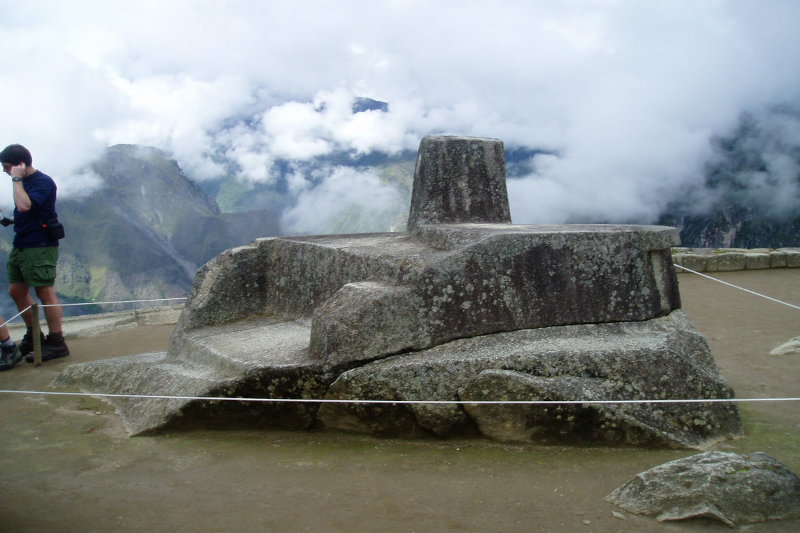
That peculiar, pillarlike rock at the heart of Machu Picchu has a name as mystical as its appearance: the Intihuatana. The name itself is a clue to its profound importance. It comes from the Quechua language of the Inca people. It combines two words: Inti, meaning “sun,” and watana, meaning “to tie” or “to hitch.” Together, they form one of the most evocative names in the ancient world: “The Hitching Post of the Sun.”
But this wasn’t just a clever title. It described the stone’s literal purpose. The Inca worshipped the sun as their primary god and ancestor. The Inca depended on it for warmth and bountiful harvests. As they observed its path across the sky, they noticed how it sank lower during winter. This gradual decline worried them, and they feared the sun might disappear altogether.
This belief gave the Intihuatana its ultimate spiritual purpose. During the winter solstice—the shortest day of the year—Inca priests performed a ceremony to symbolically “hitch” the sun to the stone. This act secured it in place and ensured its return to power. The stone was more than a monument; it was a tool of hope. It anchored their most powerful god to the earth. By understanding its name, we see how the Intihuatana functioned as both a sacred altar and a precise celestial clock.
Reading the Sun: How the Intihuatana Functioned as a Precise Inca Calendar
Beyond its spiritual role, the Intihuatana was essential for the empire’s survival. For an agricultural society like the Inca, knowing exactly when to plant and harvest was a matter of life and death. The stone pillar worked with the surrounding mountains to serve as a highly accurate solar calendar. It transformed sunlight and shadow into a guide for daily life.
The idea was very elementary but clever. The same way a sundial indicated the time of the day, the Intihuatana indicated the time of the year. Its length of shadow and its angle, upon the central pillar, would inform an Inca priest, who had been educated to read the signs of the seasons by it. The shadow would creep over the flat top of the stone all through the year. The length of it increased daily with the approach of winter. It faded away as the sun ascended the summer sky.
The heavenly clock was at its most dramatic on the two equinoxes of the year. It is a day during spring and fall when the day and the night are equal. Throughout these dates, the sun overcasts the equator at noon. The Intihuatana does a well known stunt, the pillar has no shadow whatsoever. The sun appears for a moment to be literally on the rock being covered by the pure light.
The Most Secret Ritual of the Intihuatana.
None of the events the Intihuatana followed in the heavens were as crucial as the winter solstice. It was the darkest day of the year, the time of the greatest spiritual anxiety. When the sun god Inti became weaker and came closer to them, the Inca were worried that he may leave them alone. They feared that their world would fall into an everlasting winter. The Intihuatana was their weapon to retaliate against darkness.
Here the name of this stone, The Hitching Post of the Sun, comes dramatically alive. During the solstice of the winter, high priests met at the sacrificial stone in order to conduct a theatrical ceremony. They had used the natural orientation of the stone, which best reflected the low light of the sun. Then they allegorically bound the sun to the pillar. They believe that they had used a holy rope to stop the descent of the sun and pray that it be returned.
The play was much more than mere symbolic theater; it was a play of wishful thinking. The priests hitched the sun and this provided hope to the people that the light and warmth could not be lost.This was a major twist. The ritual presupposed the days would become longer once again. Priests promised the masses that the sun would come back to its power. They ensured that the production cycle which supported the empire would be maintained.
The Last of its Kind.
It is a miracle that you can see that Intihuatana today. Although these religious rocks used to play significant roles in the significant Inca settlements. The one in Machu Picchu is among a very few that still survive. Its solitary existence provides an exceptionally solid experience of connection to a belief system that had almost been erased, and so it is much more than a beautiful carving, it is a time survivor.
This destruction of this magnitude was not an accident. With the Spanish conquest in the 16 th century, the Catholic authorities embarked on a campaign to eliminate Inca religious practices. They did not believe that the Intihuatana stones were apparatus of great astronomical clocks, but they were pagan idols. They also in the effort to convert the population systematically hunted and destroyed these sacred stones and in most cases smashed them with hammers to cut off the spiritual connection the Inca people felt with their sun god.
Then, how did the Intihuatana at Machu Picchu get off with this? This is its salvation in the mythical seclusion of the city. The citadel on top of the mountain was deserted at approximately the same time as the conquest. The city and its treasures were buried in the jungle and were preserved centuries past when the destruction that eventually covered the more accessible locations reached it. It is an invaluable and irreplaceable connection with the past since the sacred Inca stone was accidentally preserved here.
The Difference between Intihuatana and Temple of the Sun?
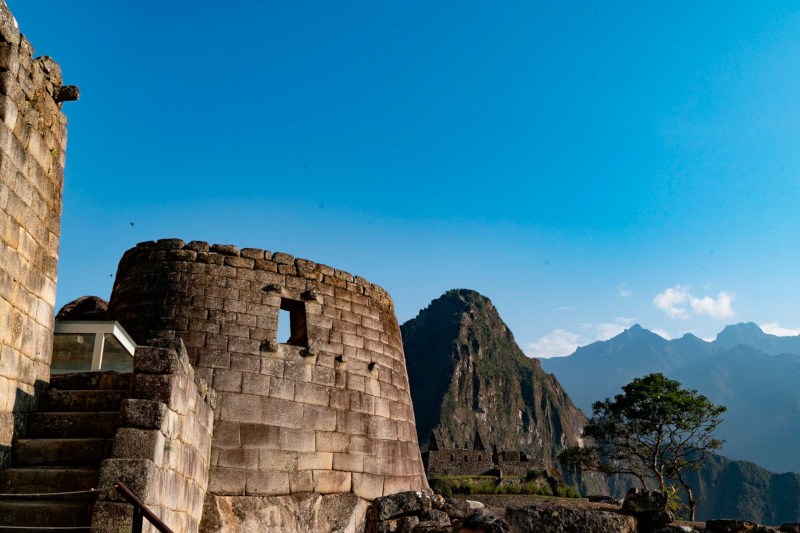
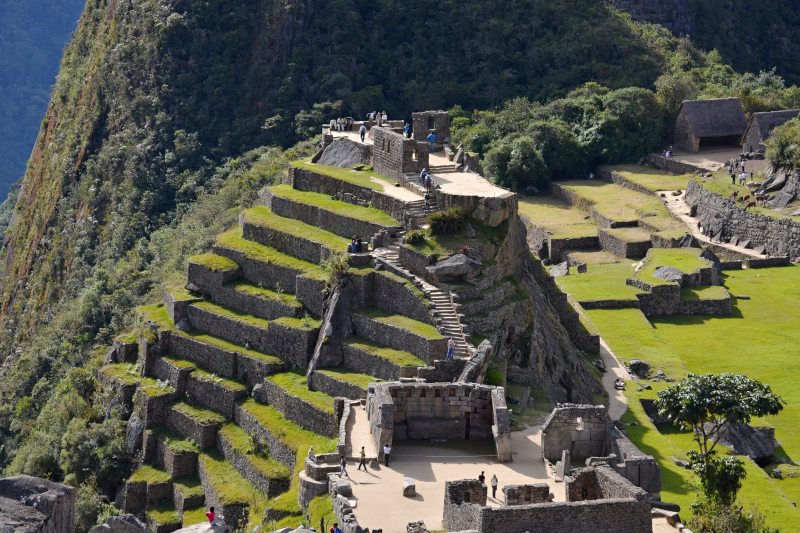
Since much of Inca life was centred around the sun it is easy to mix two of the most well known buildings of Machu Picchu: the Intihuatana stone and the Temple of the Sun. Although they were both important in terms of following the heavens, their functions were completely different and complementary. Consider it the contrast between a specialized scientific apparatus and the observatory house which shelters it. Those who hike the Classic Inca Trail and theShort Inca Trail will always be impressed by the fact that these astronomical tools indicate the same astronomical expertise used by the empire to create its sacred trails.
Intihuatana is one stone, carved with a fine detail and it is a tool which was placed in an open air at one of the highest places of the city. The Temple of the Sun, in contrast, is a beautiful, semicircular edifice, which is in a lower part. Its accurately aligned windows were also utilized in the observation of astronomy, yet it was a more formal and enclosed place of worship and sacrifices. The Intihuatana was to be actively hitching the sun; the Temple was to adore him within the sacred walls.
The following is a quick rule to distinguish between the two:
The Intihuatana and the Temple of the Sun represent the advanced level of astronomy of the Inca. The Intihuatana is a monolithic volume carved of granite in the topmost point of the Sacred Plaza. It was used as an astronomical tool to keep the solstices in check. On the contrary the Temple of the Sun is only a semicircular structure, more of a tower, in a later part of the city, which is less important, though not unimportant. It was an indoor observatory and a place of worship.
The Unfortunate Incident: What Really Damaged the Sacred Stone?
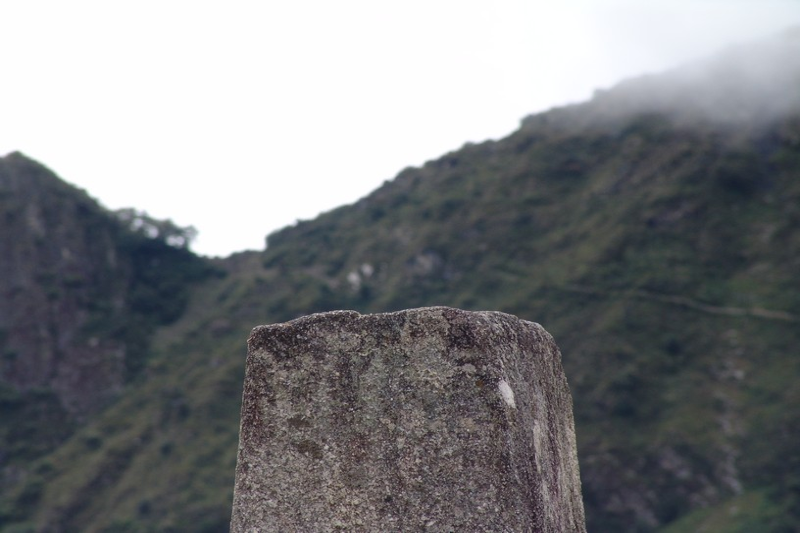
The most recognizable wound of a monument that survived the demise of an empire is remarkably contemporary. A close look at the stone of the Intihuatana will reveal that it has a very small portion of the upper corner removed. This was not a blow suffered in the conquest of a 16thcentury kingdom, or in a natural calamity. It was a blow taken in September 2000 and it scraped and lasting 500 years.
It was not the time or the weather but the shock of the new, the collision between the old and the new. A film crew that was filming a commercial on beer brought a heavy crane on the sacred site. During a horrific accident, the crane fell and its arm hit the granite monolith fracturing a part of its tip. The incident pointed out the high susceptibility of invaluable objects to commercial practices.
This was a very tragic incident, but it served as a very strong change agent. The incident caused an uproar around the world and this resulted in an entire revamp of the rules at the location. Heavy machinery is not permitted now and the rigorous regulations on the preservation of the sacrosanct Inca stone. This extreme attention to security is what is required to make sure that such a preventable tragedy.
Visitor Guide Can you touch the Intihuatana Stone?
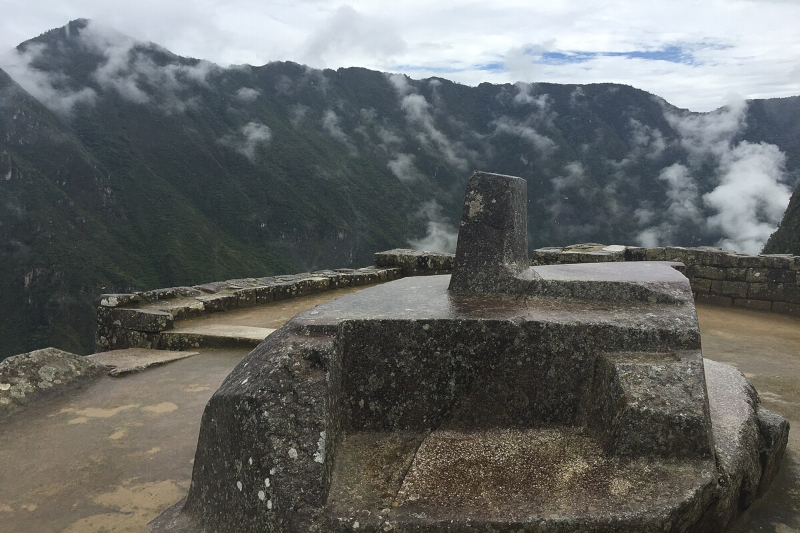
With its fantastic history and spirituality, lots of people who are visiting the site are questioning whether they can touch the Intihuatana stone as they know its power. The response to this now is a strict and yet a curt no. After the crane accident of 2000, the protective measures were tightened, and now it is not possible to touch the stone, as it is necessary to guarantee its existence for several centuries. One of the most vital rules that you will come across whilst in the upper citadel is this one.
This is not a random limit; this is a saving measure. On the one hand, it is harmless to touch someone once, but on the other hand, the natural juices and acids of human hands are corrosive. Millions of visitors taken off by that slight touch make those granite like sandpaper. In fact chipping away at the delicate edges of the stone and wearing the sharp edges which render it an astronomical wonder. The rule helps to ensure that the monument is not loved to death.
Expert Tour Guides
You do not actually touch anything but it is a very personal experience. With the help of guides, you will be taken through a specific path that provides a spectacular and close view of the whole Sacred Plaza. Being on the other side of the basic rope barrier, you get an ideal view of the distinctive shape of the stone, enjoy the work of the crafty Inca carving, and take splendid photos. Its strong presence can be felt without leaving any trace.
Tradition of the Intihuatana.
The Intihuatana is much more than a weirdly hewn stone on a foggy mountain summit. It is the centre of Inca cosmology, an astronomical device that served as a solar calendar as well as a spiritual means of hope. We have a world in its design, in which science and faith could never have been separated, rather the survival necessary was a flawless conformity to the heavens.
Its existence is a legend by itself. The Intihuatana at Machu Picchu is one of the few physical connections with the past due to its exemption from the same colonial destruction some other sacred sites experienced. But it is not so strong, the current accident which broke a corner of that one reminds us that everyone has a responsibility in preserving this invaluable heritage.
Nowadays, the Intihuatana is not only a hitching post of the sun, but a tie to the genius of a lost race. It is a strong statement of human resource and a reminder of the fact that a lot of wisdom may be incorporated in a single block of rock.