

Most people researching this short inca trail want the Sun Gate experience but aren’t interested in four nights on the ground. That’s a fair call and the short inca trail exists precisely for that reason. One day of hiking, one night in a hotel, same arrival through Inti Punku that classic trekkers get. The camping goes away. The historical route doesn’t.
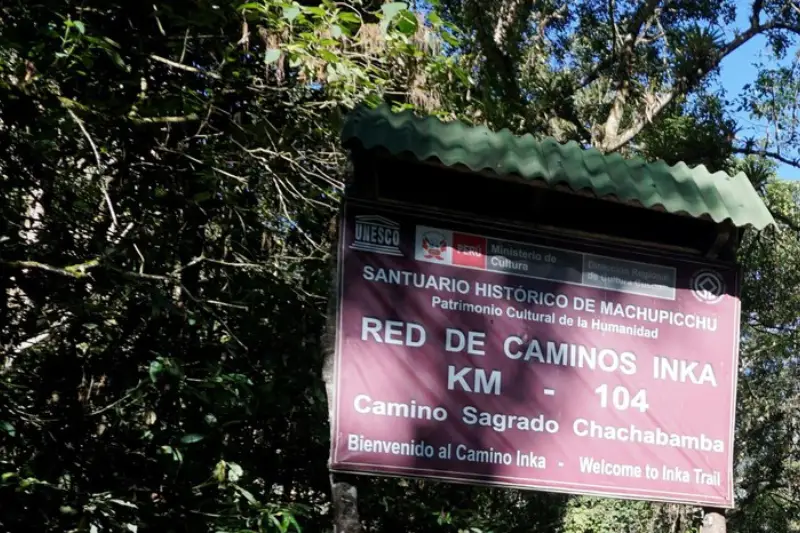
The starting point is Kilometer 104, a train stop with no town attached to it. Just a marker in the middle of cloud forest and a wooden bridge over the Urubamba River. From there it’s seven miles of hiking directly to the archaeological site. Carrying a daypack instead of a full expedition pack makes a real difference by hour three, but the terrain itself doesn’t get easier because the load is lighter. Steep stone steps and continuous ascent regardless of what’s on your back.
Late afternoon arrival at the Sun Gate works in the hiker’s favor. Morning crowds have cleared by then. The first view of the citadel is quieter and more open than what train passengers deal with coming up from the valley floor.
Short Inca Trail vs. Classic Trek: Which One Actually Fits
The classic four-day version starts at Kilometer 82. Three nights camping, high altitude mountain passes, Dead Woman’s Pass on day two. The short inca trail starts at Kilometer 104, skips all of that, and picks up the final stretch of the ancient path a few hours before the Sun Gate. Same finish line, completely different journey getting there.
Comfort is usually the deciding factor. Classic inca trail means full nature immersion over multiple days. The short version ends with a shower and a real bed in Aguas Calientes. That’s the trade.
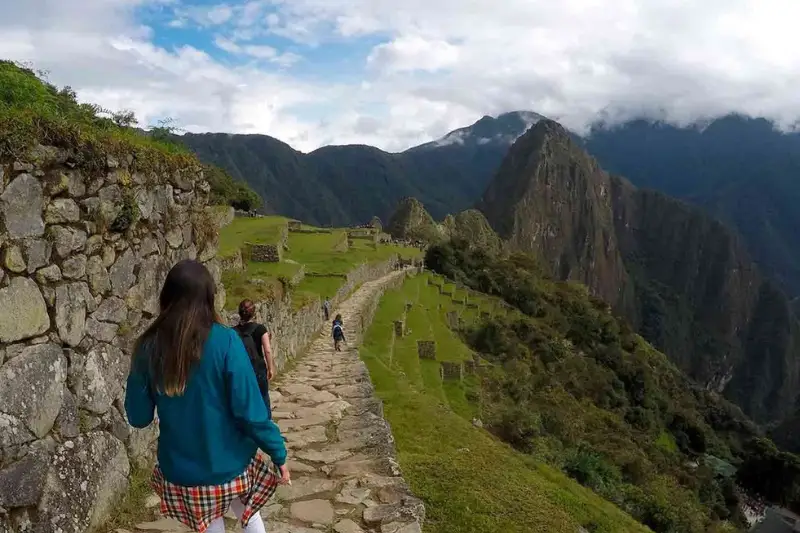
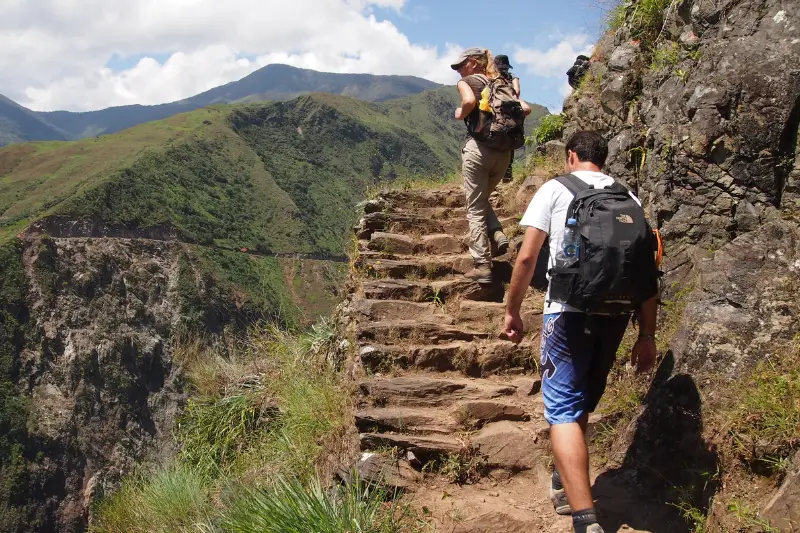
What doesn’t change is the Inca stairs. Uneven stone steps built centuries ago, taller than modern steps, continuous on the steep sections, same on both routes. Moderate fitness and knees that can handle sustained downhill load are genuinely needed here.
Numbers side by side:
- Duration: 4 days vs. 1 day hiking plus 1 day at the citadel
- Sleeping: Tent camping vs. hotel
- Distance: Around 26 miles vs. around 7.5 miles
- Max Altitude: 13,828 ft vs. 8,923 ft
The price gap between the two is smaller than most people expect. Train tickets and hotel accommodation push the short inca trail cost up significantly. Not a budget option. Both routes hit the same permit wall too, limited daily spots, demand that consistently outpaces supply, and a booking window that closes well before most people start planning.
Permits: Treat Them Like Sold-Out Concert Tickets
The government caps daily hikers to protect the stone infrastructure. Peak dry season May through August means booking at least six months out. The daily cap includes guides and porters, so actual tourist slots are fewer than the headline number. When they’re gone there’s no waitlist, no last-minute availability, nothing.
Passport details are locked in at the moment of booking. Not approximately, exactly. If you renew your passport between booking and the trek date, bring both documents to the trailhead. Rangers check against a printed manifest. A discrepancy at the gate means turning around no matter what was paid.
Independent hiking is illegal on this route. Short inca trail permits only come through a licensed tour operator. That’s the legal structure, not a preference. The operator purchases the permit, provides a mandatory guide and handles the paperwork. Locking in an operator is the first step, before flights, before accommodation, before anything.
Getting Off at KM 104: What the Drop-Off Actually Looks Like
The train from Ollantaytambo runs about 90 minutes. Most passengers go all the way to Aguas Calientes. Short inca trail hikers get off around an hour in. The stop lasts a minute or two. Guide signals when to grab the pack and move. No platform, no station building, just a gravel area by the tracks with forest on all sides.
The train keeps going and suddenly it’s quiet. Wooden footbridge straight ahead over the Urubamba. That’s the start of the hike.
The other side of the bridge has a government checkpoint. Rangers verify passport and permit against the manifest. Usually it takes about twenty minutes depending on how many groups are ahead. Once cleared the flat ground ends almost immediately. The first steep ascent starts right there at the checkpoint exit.
What the Terrain Actually Does to Your Legs
Stone steps from the first mile. Not modern steps. Taller, uneven, built for a different purpose than comfortable walking, requiring a lunging motion that loads the quads and glutes differently than flat ground does. The first three hours are uphill without meaningful breaks in grade.
Altitude changes the energy equation in ways that catch people off guard. Effort that feels moderate at sea level drains faster here. The common mistake is pushing hard early and running out of capacity before the final approach. Slow pace that matches breathing beats fast pace that forces stops every ten minutes. If talking becomes difficult the pace is too fast.
Cloud forest takes over as elevation climbs. Hanging moss, birds, cooler and more humid air, the Urubamba visible far below through the trees. Waterfall sound signals the steepest morning section is nearly done. Wiñay Wayna is just past it.
Wiñay Wayna: The Site Most Visitors Never Reach
Train passengers go straight to the main citadel. Short inca trail hikers get access to Wiñay Wayna first, which many guides consider better preserved than Machu Picchu and a fraction of the visitors ever see it.
The name means Forever Young in Quechua. Refers to orchids that bloom year-round across the ruins. The site sits steeply on the mountainside above the river with massive agricultural terraces stepping down the slope. Those terraces weren’t decorative. They stabilized the mountain and created different growing conditions at each level. Walking between them with the canyon below gives a sense of scale that photos don’t capture well.
Ten ritual fountains run through the site, sometimes called the Water Temple. Water still moves through the original stone channels. Pilgrims used these for cleansing rituals before continuing to Machu Picchu. Worth spending time here rather than rushing through it to get to the Sun Gate.
The Sun Gate: Why This Arrival Is Different
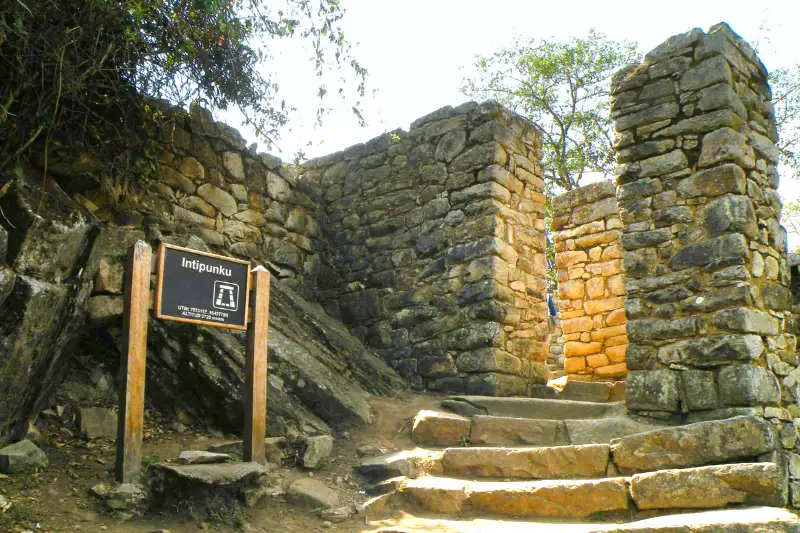
Fifty near-vertical steps just before the Sun Gate. Known as the Monkey Steps because hands and feet both get involved. Short, a few minutes, but steep enough that most people are breathing hard at the top. Then Inti Punku is right there.
Train passengers enter Machu Picchu from below and look up. Short inca trail hikers enter from above and look down. Citadel framed between Huayna Picchu and Machu Picchu Mountain from that elevation. That view doesn’t exist for anyone who came up by bus.
Late afternoon timing means morning crowds have thinned. Space to actually stand at the viewpoint without fifty people in the frame. That combination of elevation and timing is the specific thing the short inca trail delivers that no other approach does.
Packing: Keep It Under 15 Pounds
No personal porters on this route. Everything in the pack gets carried up every one of those stone steps. Guides recommend capping weight at around 15 pounds. Every pound above that is a decision that shows up in the legs on the afternoon climbs.
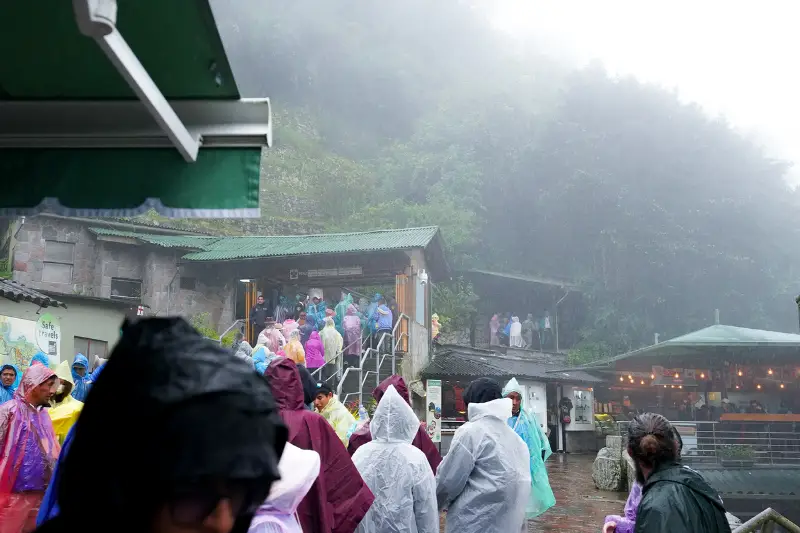
Weather moves fast in the Andes. Humid and warm in the cloud forest at noon, noticeably cooler by mid-afternoon. Layers work better than a single heavy jacket because the range across one day is too wide for one piece of clothing to cover.
What actually needs to be in the bag:
- Passport: Original document only. Checkpoint doesn’t accept copies.
- Water: Minimum 2 liters. Altitude dehydrates faster than expected.
- Rain Poncho: Lightweight and packable beats a heavy waterproof jacket.
- Sun Protection: Sunscreen, sunglasses, hat. UV at altitude is stronger than most people realize.
- Food: Energy bars or nuts for the steep sections.
Footwear is as important as anything else. Broken-in hiking boots or trail runners with grip on wet stone. New shoes on this route means blisters by mile three, which turns a hard day into a genuinely unpleasant one.
Aguas Calientes: One Night That Makes Day Two Work
Shuttle buses run the zigzag road from the ruins down to town. Thirty minutes, knees get a break, town appears at the bottom. Small riverside place, busy with hikers in the same physical state, food options everywhere.
Accommodation ranges from hostels to higher-end hotels with thermal pools. The practical question is recovery. A decent mattress and a quiet room make the next morning’s guided tour of the citadel easier to engage with. Adrenaline carries most people through the hike. It doesn’t do much for a detailed historical tour on bad sleep.
Eat something substantial that night. A carbohydrate-heavy meal after a full day of climbing makes sense and the restaurants along the river are set up for exactly that crowd.
4-Week Training Plan: What Actually Prepares the Legs
The short inca trail isn’t about speed. It’s about sustained effort on uneven stone steps for several hours at altitude. The most useful preparation mirrors what the trail actually asks for.
- Week 1: 30 minutes flat walking three times a week. Build the habit before adding difficulty.
- Week 2: Treadmill at 3% incline or hilly neighborhood route. Climbing muscles start engaging.
- Week 3: Incline to 7%, daypack with 5 pounds. Body starts adapting to load on a grade.
- Week 4: Stair climbing only, stadium steps or office building stairwell, pack up to 10 pounds. Closest thing to the actual trail without being in Peru.
Wearing the actual hiking boots during weeks three and four finds friction points before they become blisters at altitude. Cardiovascular fitness also helps with altitude adjustment, a more efficient heart handles thin air better under sustained load.
Best Months: When to Go and When to Skip It
The dry season June through August is the clearest window. Least precipitation, least slippery stone steps, best odds of unobstructed Sun Gate views. Also the busiest period by a significant margin.
May and late September hit the balance most repeat visitors recommend. Some rain risks considerably fewer people, greener terrain, orchids blooming across Wiñay Wayna. Mornings usually clear even when afternoons bring showers. Temperatures stay moderate without the freezing nights of peak winter.
February is a hard stop. The entire trail system closes for maintenance, bridge repair, drainage work. No access, no exceptions. Every other month has some version of a workable case depending on what matters more, weather certainty or crowd avoidance.
Short Inca Trail Checklist Before Booking Anything
The short inca trail is a real hiking day. Stone steps, sustained ascent, altitude, seven miles through cloud forest. The camping gets removed. The effort doesn’t.
What needs to happen before the trip:
- Dates first: Dry season May through October for the best conditions.
- Permits immediately: Six months minimum, licensed operator only, no other path exists.
- Train on inclines: Flat ground doesn’t prepare legs for what this route asks.
- Pack under 15 pounds: Essentials only, nothing else.
- Original passport only: No copies at the checkpoint, no exceptions.
Arriving at the Sun Gate from above after climbing to get there is a different experience from looking up at the citadel from the entrance below. Not a marketing line. Just the actual geometry of the two approaches. The short inca trail puts you above it looking down. Everything else puts you below it looking up. That difference is real and it’s the reason people specifically seek out this route over taking the train.