

The majority of ancient ruins only remind about a lost world. But Ollantaytambo is another. This is where water channels that were built 600 years ago are still running, and people are living on the foundations constructed to an emperor. History is not an ordinary thing, it is a place.
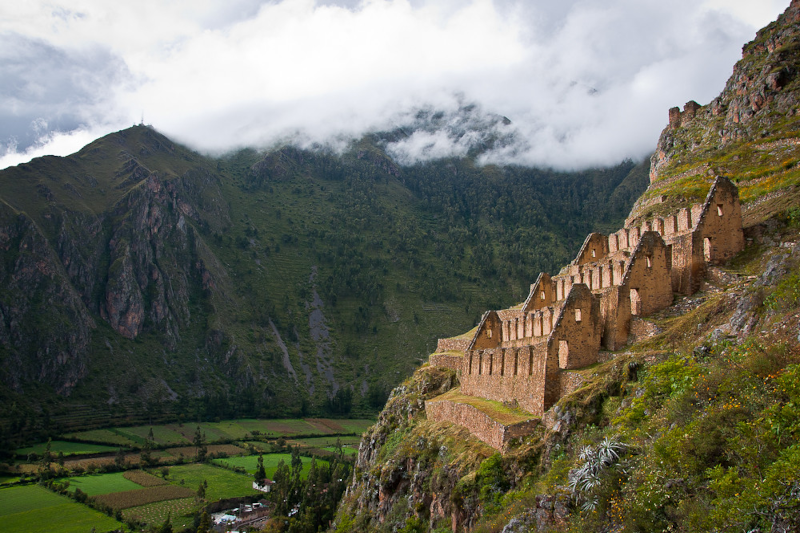
Nestled in Peru’s Sacred Valley, Ollantaytambo poses a fascinating puzzle. What was it used for? A royal estate, a sacred ceremonial center, or a military fortress? Archaeological evidence suggests all three. Each terrace and perfectly cut stone tells part of its story.
Beyond its engineering, Ollantaytambo was the site of a historic victory. High on these stone walls, an Inca leader fought back the Spanish conquistadors and won. This story reveals how the Incas built and defended Ollantaytambo, and how its legacy continues to shape the town today.
Who Was the Mastermind Behind Ollantaytambo? Meet Emperor Pachacuti
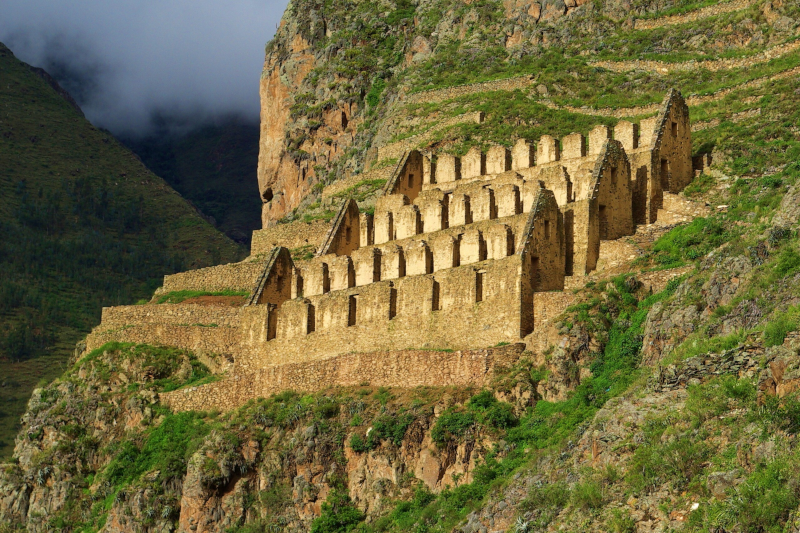
Ollantaytambo’s grand design traces back to Emperor Pachacuti. Known as the “Alexander the Great” of the Andes, he also commissioned Machu Picchu. After conquering the valley in the mid-15th century, he reshaped the landscape. Ollantaytambo became his masterpiece.
Conquering territory was only the first step. Pachacuti turned it into a working part of the empire. He transformed the Sacred Valley into royal estates, palaces and administrative centers combined. Ollantaytambo served as his temple, fortress, and retreat.
Building on this scale sent a clear message: the Inca were here to stay. Quarrying and fitting massive stones demonstrated authority and resources. The estate wasn’t just for show. It had to support workers, soldiers, and priests on steep terrain. This required clever farming solutions.
How Did the Inca Farm on a Cliff? The Genius of the Agricultural Terraces
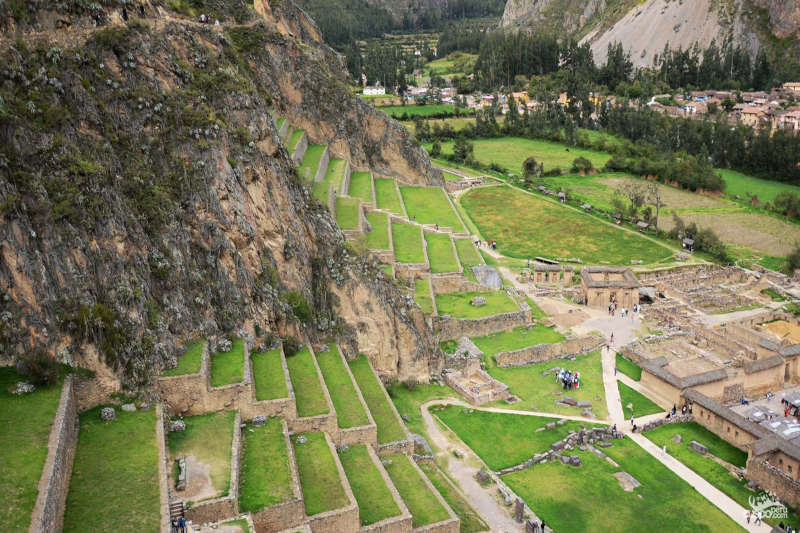
Faced with a steep, rocky mountainside, how do you feed a bustling population? The Inca’s answer was as practical as it was breathtaking: the great agricultural terraces (or andenes) that cascade down the slopes of Ollantaytambo. Looking like a giant green staircase carved into the mountain, these terraces transformed an unusable landscape into fertile farmland.
But these weren’t just simple garden beds. Each level of the terraces created its own unique microclimate.
- The Meeting: We gather at Plaza Regocijo, an easy central hub that makes escaping the city bustle effortless.
- The Prep: After a quick drive to Tica Tica, we provide a brief, jargon-free orientation to ensure you feel steady and confident on your ATV.
- The Trail: Ride across wide dirt paths and expansive highland landscapes, enjoying the crisp mountain air and panoramic Andean views.
- The Discovery: We’ll explore the Abode of the Gods on foot, giving you time to wander among the massive stone giants and capture their scale.
- The Return: Wind back through quiet farmlands and rolling hills, arriving in Cusco by 1:00 P.M. with the rest of your afternoon free.
How Was the Temple of the Sun Built?
Day 1: The Airport and Getting Acquainted.
Your first day sets the stage. The road leading out of a bridge on the Urubamba River is surprisingly gentle, passing through little villages and next to local farms. It is a day to make a home and feel your pace and get to know your hiking companions. The actual wow factor is when you turn around a corner and first glance upon your first major Inca construction, Llactapata. Looking at these spreading agricultural fields, located across the valley, you start to understand how large the civilization that created them was, and this one becomes not just a hike, but a tour in the past.
Day 2: Overcoming the Pass of Dead Woman.
The next day dawns with the greatest and most renowned test of the trail, which is the Dead Woman’s Pass. The name is frightening, yet based on the form of a mountain profile, which looks like a woman resting. Your guides will call you by the Quechua name, Warmiwañusqa, as you start on the never-ending climb. It is here that your training will come in. It is slow, gradual and tough, and you have no choice but to concentrate on your breathing and the rock steps before your feet.
The experience is a breathless ecstatic moment at the summit, where the altitude is 13,828 feet (4,215 meters). You have made it to the peak of the trail and the 360 views of the Andes are your reward. It is long, knee-threatening down on old stone stairs after a celebratory drink with your party, and down to the valley of the Pacamayo, which is where you will camp. You will come exhausted and with a fantastic feeling of achievement because you will have conquered the most physically demanding part of the trek.
Day 3: Cloud Forest Beauty and Inca Engineering.
Most hikers consider day three the most interesting and beautiful, especially after the tough effort of day two. The trail features original stonework, and workers have carefully maintained it over the years. It takes you through tropical cloud forests, orchids and bromeliads. It is a historical treasure hunt as well as you will be allowed to visit several interesting ruins. You will ascend the circular ruins of Runkurakay, and cross the wonderful settlement of Sayacmarca, or Inaccessible Town. It seems to cling to the side of a precipice, asking yourself how anybody could have constructed a building there.
The genius of Inca engineering is on display here in this part of the journey. The trail itself is one of the attractions, as it winds along the mountain-side and through hand-excavated tunnels. The camping sites used on this night are usually breathtaking points, and there is breathtaking scenery of the snow capped mountain range of Salkantay.
Day 4: The Sunrise on the Sun Gate Machu Picchu Arrival.
The last morning starts earlier than the sunrise. You get off a very early fast breakfast early in the night, and you walk the last few miles in the dark before daybreak, with your headlamp, a procession of bobbing lights marching in mutual expectation. The point of destination is Inti Punku, the Sun gate. This was the ancient, official entrance of pilgrims on the trail on Machu Picchu and its intention is revealed in a moment. Then as you pass through the stone gateway the morning mist, which just lies below you, starts to break, and the historic city of Machu Picchu lies down in the valley beneath, and is enveloped in the first golden rays of sunlight.
Final Thoughts
Choosing the correct gear to take on a 4 day Peru trek might be a little bit daunting but it is not the amount of gear one carries but the intelligence of the gear. The easiest tip is to dress like an onion and use the simple system of layers that gives you the ability to change on the spot. See it as a 3-layer system, where the bottom layer is a moisture-wicking base (such as a synthetic t-shirt), the second layer is a warm up layer (a plush fleece), and the third layer is a waterproof layer (your rain jacket and jacket pants). This arrangement will make sure you are neither overly hot nor overly cold as you travel through the changing environments of the classic inca trail 4 day itinerary.