


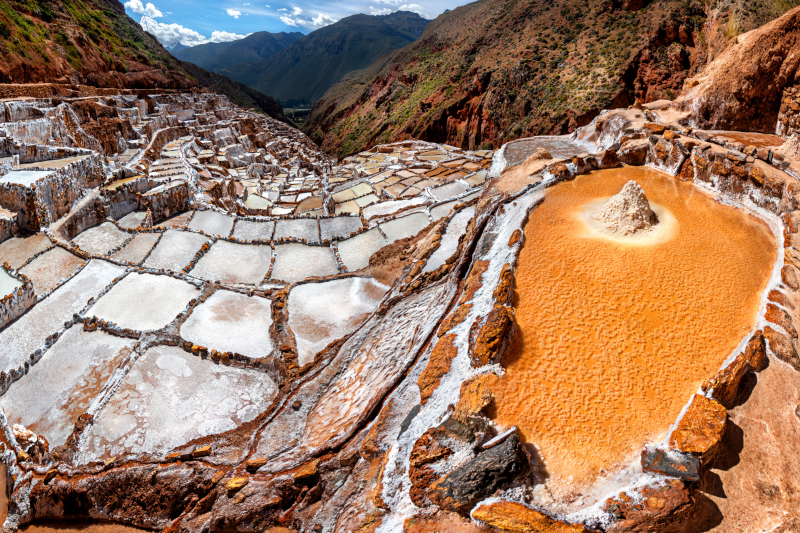
Suppose the mountain side is all over with thousands of glittering white pockets, which look like a great patchwork quilt. In Maras Moray Cusco, this isn’t snow, but an ancient network of salt evaporation ponds. These Salineras de Maras are still harvested by local families: in the same way as they were baked long before the Incas ascended.
It took revolutionary agricultural engineering instead of primitive farming to sustain millions of citizens in the most rugged mountainous regions of the world. Outside Machu Picchu, the larger Sacred Valley had the solution. A visit to these Cusco underknown sites shows how an empire actually was able to conquer its harsh terrain.
Against these pale white flats, however, is to be seen the dark green jewels of Moray, of an emerald colour. A farmers lab is a technological farm laboratory described as high-tech, although it may at first glance seem to be a giant green stadium. Incas controlled the wind and sun affecting the distribution of different crops by building stepped Andenes (agricultural terraces) of different depths.
Archaeological evidence shows the two locations were essential survival mechanisms and not merely decorative buildings. Maras and Moray, fruitful cultural traditions provide us with a unique insight into pure culture-scientific ingenuity, which today are practical masterpieces, perfectly able to support a huge population.
Decoding the Moray Circles: How Ancient Engineers Created a Vertical Greenhouse for Crop Innovation
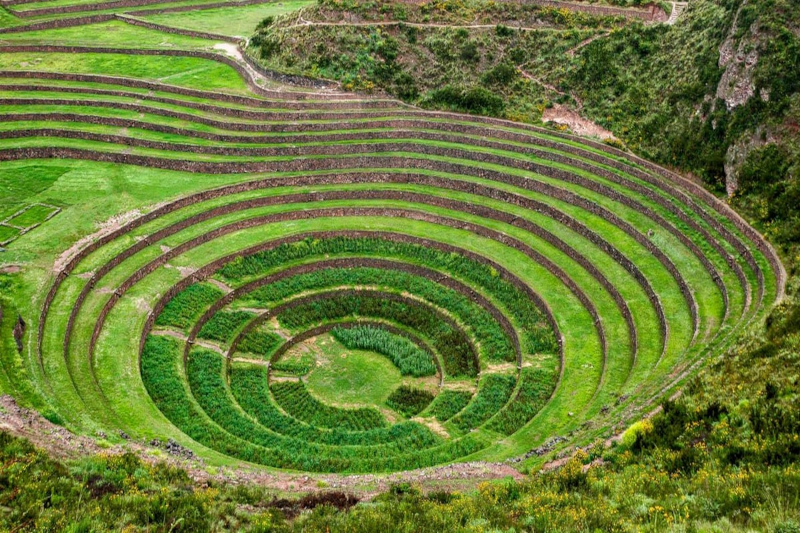
The Moray archeology site resembles a prehistoric amphitheater. Rather than house a sporting event, these plummeting concentric rings formed a high-tech farm laboratory embedded into the earth. The ancient engineers produced a highly controlled micro climate by making deep bowls into the landscape and analyzing the resulting survival of the plants in various conditions.
Going down the rim to the bottom circle is like stepping out of an open front porch into a freight furnace. The profound rings have physical features of blocking mountain wind and trapping heat, producing unique weather bubbles called microclimates. Due to this magnificent design, the temperature drop between the upper step and the bottom one might be as much as 15 degrees Celsius (27 degrees Fahrenheit)!
The Science Behind the Microclimates
This experiment on microclimate of the circle of terraces was further enhanced by sunbaked stones. The stone retaining walls serve as a thermal mass, absorbing hot heat throughout the day and slowly giving it back at night to keep fragile roots out of frost. Combined with the ancient Inca hydraulic engineering that ideally drained rainwater to avoid flooding, the farmers produced a masterpiece of vertical agriculture by placing various growing areas one on top of another.
The Inca agricultural laboratory significance becomes incredibly clear when you examine the distinct testing layers built into these hillside stairs:
- Deepest Rings: Hot and humid, mimicking the low-elevation jungle to grow coca leaves.
- Lower Middle: Warm and sheltered, ideal for testing coastal crops like cotton.
- Upper Middle: Moderate temperatures perfectly suited for developing heartier strains of maize (corn).
- Windy Top: Cold and exposed, replicating the high Andes to cultivate resilient potatoes.
How do you feed a million people spread across the world’s most rugged mountains? You figure out exactly where each plant thrives best before distributing those adapted seeds to your farmers. Moray wasn’t just beautiful; it was a vital survival tool that fueled an empire. Not much farther down the road another engineering marvel addresses an entirely different type of survival requirement, a single spring serving thousands of pre-Inca salt ponds.
The Shimmering Pools of Maras: How a Single Spring Feeds Thousands of Pre-Inca Salt Ponds
Whereas the green circles of Moray seem a faint brightness, the Maras salt mines provide piercingly bright contrast to the Andes. These pools are cascading pools that contain the very highly concentrated mineral water flowing the earth directly through these pools. These exquisite evaporation ponds have been owned since the times of the Inca Empire by local families.
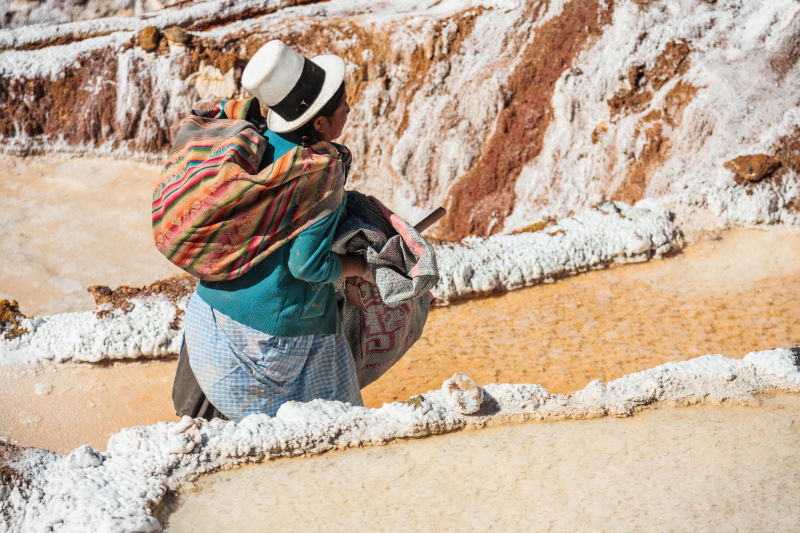
The trick is based on elementary physics and a geological anomaly. One underground hot spring causes salt-water (water saturated with dissolved salt) to flow into a spider of trenches. Since the process is dependent on natural solar evaporation, it operates in the same fashion as putting a glass of ocean water in the hot sun. Still today, locals employ pre-Inca methods of harvesting salt to trap this moisture, harvesting the precious minerals remaining behind.
The Traditional Harvesting Process
A look at the harvest will show how hard people have to work to create this food commodity. To turn flowing spring water into crystallized salt, the community performs an exact three steps procedure:
- Flooding: Families open channel notches, letting shallow saltwater fill their designated clay ponds.
- Evaporating: High-altitude sunlight bakes the pools for several weeks, leaving a thick, crusty layer.
- Harvesting: Workers carefully scrape the dry crystals into baskets, securing the final harvest into heavy sacks.
Ownership of these 3,000 pools does not belong to a massive corporation, but operates exclusively as a community cooperative. Only local district families can inherit a pond, ensuring the economic benefits stay firmly rooted in the neighborhood. The fruit of their labour is a much-desired commodity that boasts the pink health benefits of Peruvian salt. These special rose-colored crystals are packed with calcium, iron, and magnesium, which the typical table salt merely doesn’t contain.
You can see this living history personally, by paying a modest Salineras de Maras entrance fee to the community at the gates. When we stand at the edge of the canyon, it is precisely because this form of cooperation is as essential in the present day as it was in the past. Logistical planning makes it possible to combine visits to these glittering pans and agricultural rings near them without problems.
Maximizing Your Sacred Valley Day Trip: The Ultimate Guide to Permits, Timing, and Itineraries
Navigating Cusco’s entrance fees often feels like solving a complex puzzle. To access Moray, you must purchase the Boleto Turistico (Tourist Ticket), a centralized pass for regional archaeological sites. Understanding Boleto Turistico del Cusco coverage is crucial because the Maras pools are completely excluded from this network. Since local families still own and operate the salt pans, you must pay their separate, small entrance fee directly at the main gate.
A well-planned Sacred Valley day trip itinerary prevents hours of frustrating backtracking through the mountains. Travelers usually start early at the Chinchero weaving village before descending toward the agricultural ruins. Peruvian salt pans are best seen mid-country in the morning when the sun in the Andes falls at the perfect angle to get the most out of the water. Then you can take a hefty lunch in the hub of the central valley, Urubamba.
Your method of getting to all these places will be completely dependent on how much money and how much adventure you are willing to buy into. Though colectivos (shared transit vans) are inexpensive to ferry locals between major towns, they leave these distant destinations out altogether. This private tour vs group excursion comparison highlights your primary direct options:
- Private Driver: Highest cost, but offers maximum flexibility for pacing and timing.
- ATV Tour: Medium cost, adding high-adrenaline dirt-road riding between stops.
- Group Bus: Lowest cost, though it operates on a highly rigid schedule.
Once you arrive at these breathtaking historical landmarks, capturing the experience requires practical preparation.
From ATV Trails to Photography Tips: How to Capture and Experience the Highlands Like a Pro
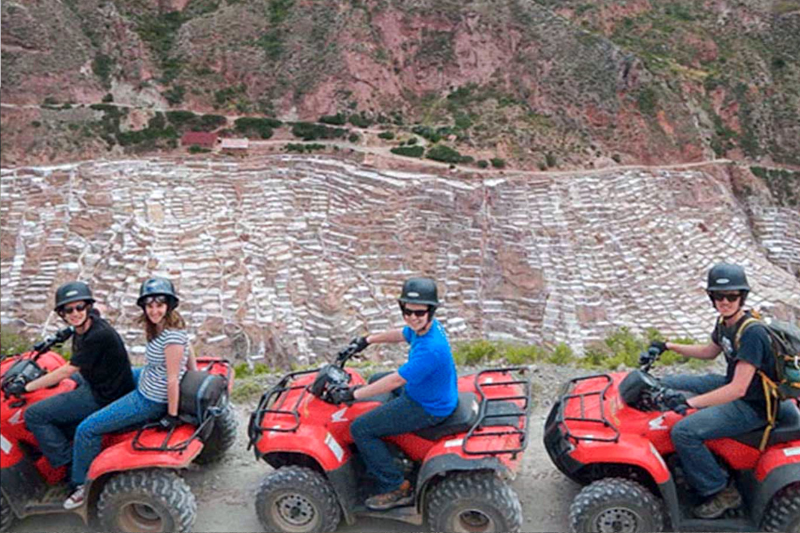
Entering the thin air at an altitude of 3,500 meters should not be taken lightly; and this is a fact that Incas respected, by worshiping the Apus (sacred mountain spirits). Although one chokes when walking, hopping around the Sacred Valley in an ATV would be an exhilarating workaround. Climbing spares your legs the work of discovering the road, but you still need to deal with altitude sickness in the Andes by deliberately adjusting to the elevation and taking things slow and steady.
Capturing these geometric marvels effectively requires timing your light. The most crucial photography tips for evaporation ponds center on glare: shoot Maras from the upper deck near midday, when the high sun turns the terraces into a blinding white mosaic. For Moray, wait until the sun sits high enough to eliminate the deep, obscuring shadows trapped inside the massive agricultural rings.
To stay comfortable in this rugged environment, bring these five essentials:
- Coca leaves: The traditional local remedy for the altitude.
- A polarized camera filter: Crucial to cut the harsh salt glare.
- Removable clothing layers: Necessary for shifting, cold mountain winds.
- High-SPF sunscreen: Essential due to intense, high-elevation UV exposure.
- Small Peruvian coins: Needed for local vendors and bathroom access.
Equipped and acclimated, you can focus entirely on the history beneath your feet.
The Legacy in the Salt: Why These Ancient Innovations Define Modern Peru
Maras and Moray represent the sheer genius of human adaptation. It was not only that the Incas survived the rugged Andes, they engineered them. Many centuries later, the same time-honored pink salt is used in the recipes of the country-wide restaurants that have gained fame throughout the world, thus bridging a science experiment of the past directly to the present masterpiece of the culinary arts.
Get ready to make this love of Inca cultural heritage into an experience that you will remember forever:
- Secure your tourist pass early for seamless entry into the ruins.
- Pack removable layers for dramatic temperature shifts as you descend into the terraced microclimates.
- Purchase salt directly from the community cooperative to sustain their ancestral livelihood.
By the time you are standing on top of those gleaming white pans and those flawlessly round green rings, you will not realise that you are looking at a mere postcard scene. You will experience the living heritage of a people who made good use of the earth.