

Arriving in Cusco, many travelers ask the same question. Is a guided Cusco City Tour worth it, or can you explore alone? While you can walk through the city’s beautiful plazas and streets, you often only see the surface. A great guide does much more than point at buildings. Instead, they translate history. In this way, they reveal hidden stories and cultural clashes that bring the stones to life.
Qorikancha: From Golden Temple to Colonial Church
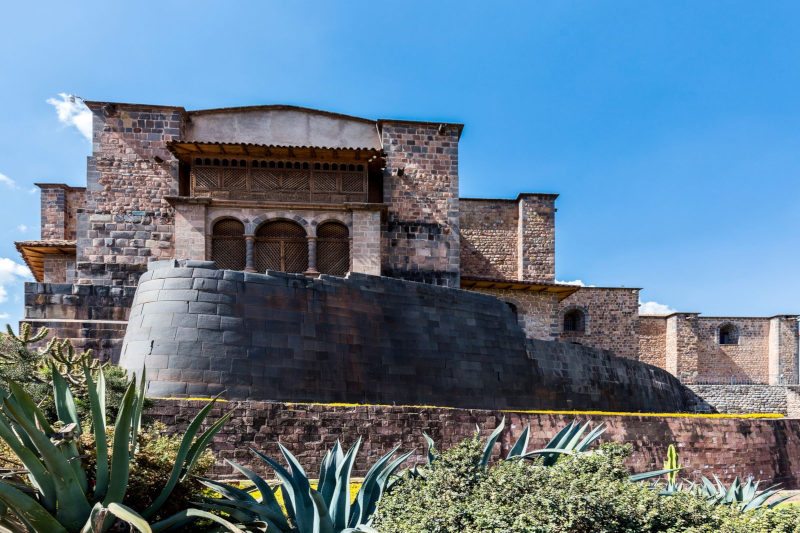
For example, consider the Qorikancha, the “Temple of the Sun.” Without a guide, it appears as a beautiful Spanish convent built over old walls. However, with a guide, the meaning changes. You learn it was the sacred center of the Inca universe. At that time, it was covered in sheets of solid gold. You also hear how that gold was stripped away to pay an emperor’s ransom. As a result, Andean history changed forever. This context turns the site from a simple photo stop into an unforgettable experience.
Then there is the practical side of logistics. A typical city tour covers the main cathedral and four major Inca ruins in half a day. In contrast, visiting these Cusco ruins alone requires several taxis or local colectivos. Because of this, the trip can take a full day and a lot of energy. Therefore, whether you choose a private or group Cusco excursion, the tour saves time and effort. You can focus on the magic, not the map.
City of Layers: What You’ll Discover in Cusco’s Historic Center
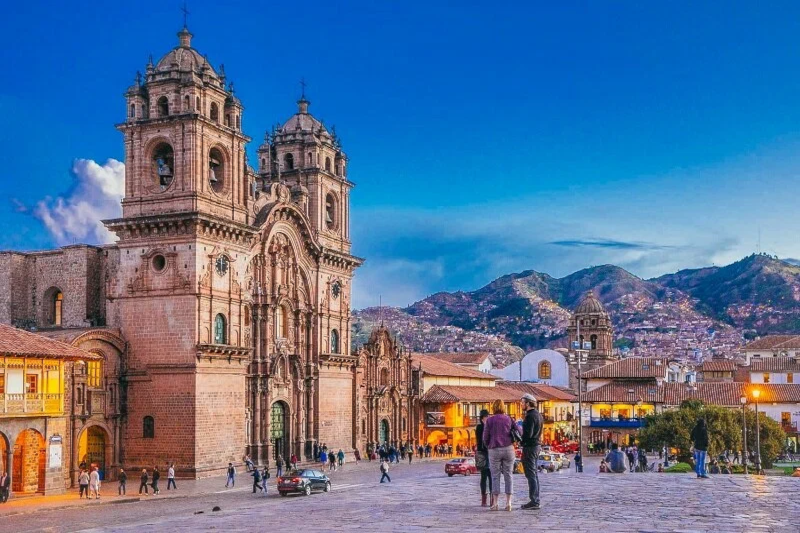
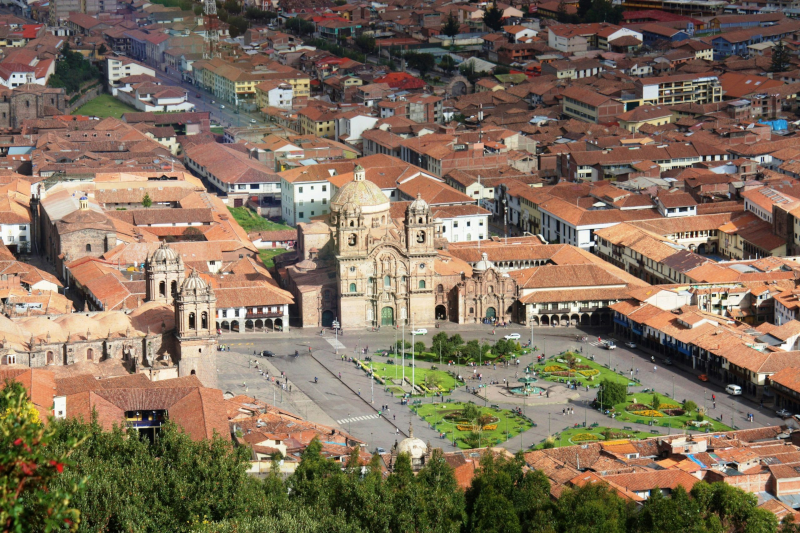
Your journey into Cusco’s past begins in its vibrant heart. However, the history here always has two sides. Step inside the Cusco Cathedral and you see more than European architecture. Look closely at the art as well. Local artists, hired by the Spanish, quietly wove their own culture into religious paintings. The most famous example is the Last Supper painting. Here, the main dish is a guinea pig, a traditional Andean food. This detail offers a surprising glimpse into how two worlds merged.
This cultural blending becomes even clearer at Qorikancha. Once the most sacred site of the Inca Empire, its walls honored the sun god with gold. After the conquest, however, the Spanish built the Convent of Santo Domingo on top of the Inca foundations. As you walk through, you can touch both histories. Below, the Inca stones are smooth and curved. Above, the colonial church stands rigid and straight. Because of this contrast, the site feels like a living museum of conquest and resilience.
Once you learn to spot these differences, you notice them everywhere. The perfect Inca stonework contrasts with rough Spanish construction. Still, this story does not end in the city center. Instead, it continues on the hills overlooking Cusco.
Above the City: Exploring Saqsaywaman and the Four Hillside Ruins
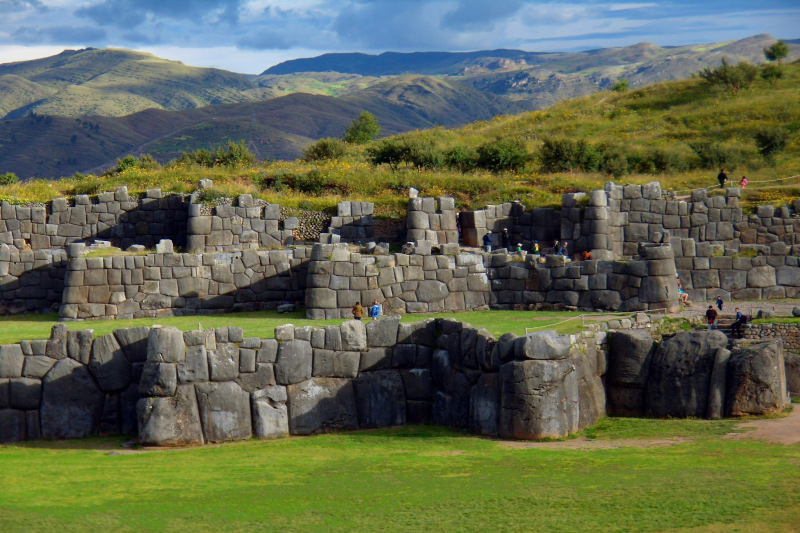
Just a short drive up from the city, the scale of Inca ambition explodes into view at Saqsaywaman (pronounced roughly like “sexy woman”). Here, monumental stone blocks—some weighing more than 100 tons—are fitted together with impossible precision to form massive zigzagging walls. As you can see in the photo, people are dwarfed by even the smallest of these stones, leaving you to wonder if giants or magic were involved in their construction. While it looks like an unconquerable fortress, many believe it was also a great spiritual center for the Inca empire.
Q’enqo: Sacred Rituals Carved into Rock
Just a couple of minutes later, the emphasis is taken off the huge military strength and on close to personal spiritual practice at Q’enqo. This location is not a structure, but it is a natural outcrop of limestone which the Incas carved into a ceremonial site. It has underground corridors that you can explore and the chilly stone alter which the historians reckon that rituals and possibly even mummification occurred. It is an enigmatic and interesting look into the spirituality of the Inca.
Tambomachay: The Inca Temple of Water.
The tour usually proceeds to two lesser yet equally interesting places that bring out the various things of the Inca life. First is Puka Pukara, a small fort or castle, which is so called the Red Fort because its stones are of the colour of the setting sun. It probably was a military checkpoint that restricted the entrance to Cusco. Right next to it is Tambomachay, the peaceful Inca water temple. In this case, one can see a set of masterful aqueducts and canals that deliver spring water to small and calm waterfalls that show the Inca profound respect to nature.
The combination of these 4 ruins shows the genius of Incas. They were never just random structures, they created a protective and spiritual ring around their capital; they had their purpose. Seeing them is part and parcel of the standard Cusco half-day tour program, and making entry to all of them is very easy, thanks to one, mighty pass.
The Cusco Tourist Ticket (Your “History Theme Park Pass”): How to Use it.
That single, mighty swab that we have just referred to, is the Boleto Turistic del Cusco (Cusco Tourist Ticket). Imagine it is a history theme park pass. During the city tour, it is the only way to enter the four big ruins Saqsaywaman, Q’enqo, Puka Pukara and the Tambomachay. Individual entrance tickets are not sold at these places, which is why it is absolutely necessary to have the proper Boleto to go on a tour.
You do not even need the 10-day ticket to save money and make things simple. Rather, you will prefer the Partial Ticket of Circuit I. It is a one-day pass that only covers those four archaeological sites, hence it is ideal for the half-day tour of the city. The price of this ticket will be included in the package of most of the tour operators or you will be able to buy it at the entrance of the first ruin you will visit.
More importantly, the Boleto Turistico does not include access to the Cusco Cathedral or the Qorikancha (Temple of the Sun). These two large attractions can be found on the majority of city tours, but they charge individual entry fees at the gate. This kind of prior knowledge will assist you in budgeting well and will also make your day of exploration an easy, surprise-free day.
Group Tour vs. private Guide: The best way to select your ideal cusco tour.
Now that you are informed about what kind of tickets you will require, what you are left to decide is the way you will tour the city. Are you on a common bus tour or do you have own personal guide? The decision narrows down to a typical travel trade-off: the price versus the tailor-made. The most popular and cost-effective is a group tour which provides a tailor-made experience to a person with a private guide. It does not matter what is wrong or right, just the one that fits your style of travel.
In order to make your choice, remember what is most important to your trip. Are you a low-end social traveller or a history lover who can swim?
Group Tour:
Advantages: Extremely cheap, excellent means of finding travel companions.
Cons: Has a strict and quick schedule; the guide is less attentive to the individual.
Private Tour:
Advantages: 100 per cent freedom to spend time in locations of your choice, ideal in the case of a photographer or a family.
Cons: More expensive; it is better to book it in advance and have a terrific guide.
Finding your tour is simple. Group tours can be made by going online or at dozens of agencies located surrounding the main square of Cusco the Plaza de Armas. When you need the services of the best private guide to tour the Cusco city, then one of the best tactics is to have your hotel recommend someone to you. Near the Cathedral there are numerous good, licensed guides, too, tempting their services. Either way, a bit of planning will make you spend the day of your life visiting the very heart of the Inca world.
Tour Preparation: What to Wear on a Tour, and Altitude.
Super layers make dressing in Cusco on a day of walks complete. The sun is hot up here, and in a moment once you get in the shade or the cloud comes over it you will have a definite chill. Wearing a t-shirt, warm up fleece or sweater and a pair of walking shoes are the best bet. On an ideal sunny morning, carrying a light rain jacket is always a good idea as the weather in the mountains can change at any time.
The golden rule is to take it easy on your first day in the city in order to have your body acclimate to the city (11,152 ft / 3,399 m). Make a lot of water and drink what the locals drink mate de coca (coca tea). This is a herbal tea that is available in every place and is a tested and proven remedy against mild altitude sickness.
Having a few articles, you will be ready to your half-day tour. Prepare a small bag with the following necessities:
- What to Bring:
- A small backpack for your layers and water
- Sunscreen and a sun hat
- A reusable water bottle
- Cash for small purchases or tips
- Your passport/ID and Boleto Turístico
Your Cusco Story Starts Here: Turning Your Tour into an Adventure
You arrived in Cusco seeing stone walls and colonial churches. Now, you see a story. The city tour hands you the key, transforming those walls from simple curiosities into monuments of Inca genius. You’re no longer just looking at Cusco’s top attractions; you are reading the layers of history written into the very foundations of the city. You came with questions and now you leave with a narrative.
With this new perspective, the rest of the Cusco historical center opens up. For your first independent adventure, try one of the best things to do in Cusco: spend the afternoon wandering the artisan-filled streets of San Blas. You won’t just see charming alleys; you’ll recognize the living culture that grew from the history you now understand. You’re no longer just a visitor, but a confident explorer ready to find your own stories.