

Outside the main tour attractions are two of the most breathtaking Inca trail paths in the area of Cusco although you may not explore them on a typical day trip. The first one is the mysterious site of Moray which resembles a huge green amphitheater hewn out of the ground. These were not entertainment circles but a complicated Inca agricultural laboratory in the form of spectacular concentric circles. The Incas were able to experiment with various microclimates on each terrace. The crops that would flourish at different elevation such as potatoes and corn. This is part ingenious idea to grow food in the mountains.
Only a few minutes drive away the landscape turns into a sparkling mosaic of white and tan. This is the Maras Salt Mines, an impressive structure of thousands of small, terraced pools falling down a hillside. These ponds are fed by a natural saltwater spring and harvested to produce salt since the time of the arrival of Incas. The tradition has been preserved today with local families operating their individual pools. Picking the salt laden with minerals by hand making a truly unique and living historical relic.
More importantly, due to their geographical positioning off the main road between Pisac and Ollantaytambo. Therefore Moray and Maras are not commonly part of an overnight tour. Provided that such amazing places are on your list of must-see locations, you will probably want to reserve another half-day tour out of Cusco. A private Cusco-area tour that will find time to explore them, or find a Sacred Valley 2 days long itinerary, which will devote time to these wonderful locations.
Sacred Valley Day Trip: Decoding Your Tour.
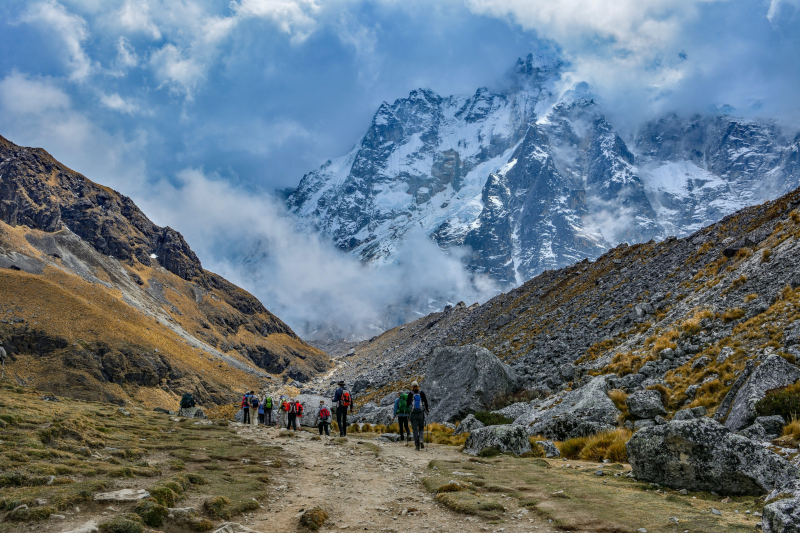
As you begin searching the Internet on the best sacred valley day trip out of Cusco, the answer will be two major ones: group and private tours. Group tours are inexpensive and very effective to socialize with other travelers. The drawback of the latter is the cost which, though higher, is compensated by flexibility and a more intimate experience. You can spend more time at the places where you are the most interested. The decision you take actually lies with your traveling style and budget.
What then constitutes a sacred valley tour price? Typically, whatever you pay at the start of your trip will cover your transportation by comfortable bus or van. Having the services of professional, bilingual guide who will make the history of the Inca sites come alive. This is the bare essential and you will be able to access the sites and have a clue of what you are looking at.
Permits for Access
Almost all the typical tours mean that you will have to pay the following expenses independently:
The Boleto Turistico (Tourist Ticket): This is a sort of compulsory multi-arket ticket to the archeological sites of the Sacred valley. You will buy this on your own with the assistance of your guide usually on the tour day.
Lunch: The majority of day tours visit a buffet-style restaurant in Urubamba which is an added expense unless you are taking a particular full day sacred valley tour that includes lunch.
The advice to your guide and driver. This is because knowledge about these costs in advance is the key to a stress free day.
The 8 Things to Pack and Altitude Secret Tips to Beat in Your Sacred Valley Escape.
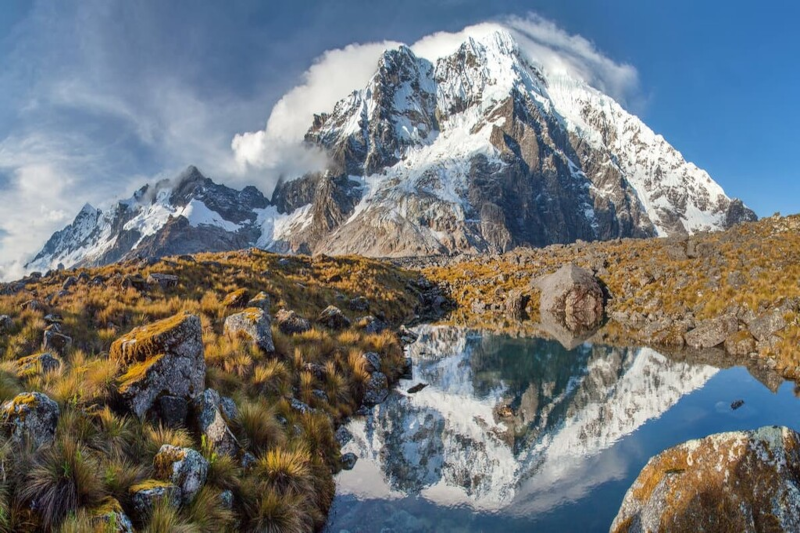
The altitude is one of the biggest concerns of the traveler about the Andes. The golden rule in the case of avoiding altitude sickness in the sacred valley is acclimatization. In effect allowing your body a day or two in Cusco to get used to the air being thinner before your tour. If you can make it through the adjustment period, drink plenty of water, eat smaller meals, and use what the locals have been using all along, the coca leaves as a tea, called mate de coca. The first few days should be spent by taking easy so that you can feel great when on tour.
The dry season in Peru that falls between April and October is the most appropriate period of the year to visit there sacred valley. The payoff will be sunny days that will be ideal to do photography. Nonetheless, Andean weather may switch within a second, and it is important to pack smart regardless of the time of the year. The trick is to wear clothes which can be added or removed easily when a cool breeze is replaced by warm sunshine in the mountains.
You can pack cleverly on what to pack to the sacred valley to ensure your day trip in the valley is a comfortable and stress-free one. These are the basic necessities that your daypack must have.
Layers: A light waterproof jacket and a fleece are also obligatory.
Sun Protection: High altitudes have an incredibly powerful sun that requires a wide-brimmed hat, sun glasses and high-SPF sunscreen.
Reusable Water Bottle: Keep fit!
Cash (Peruvian Soles): To buy your lunch, market souvenirs and tips.
Your Passport and Boleto Turistico: These you will require to access the archeological sites.
On top of the Day Trip: Sacred Valley vs. Machu Picchu and Planning an Overnight Stay.
The Sacred Valley is not just a road to a citadel but the vast fertile throb of a former empire. It is more profound, more considered and filled with history.
How to Prepare for High Altitude and Beat Sickness
Now that you understand that altitude is the biggest hurdle, let’s talk about the single most effective way to overcome it. The secret isn’t some expensive gear or intense training regimen; it’s patience. This vital process is called acclimatization, and it simply means giving your body time to adapt to the thinner air. The non-negotiable rule for a successful trek is to arrive in Cusco at least two, and ideally three, full days before you start hiking. This period of acclimatization in Cusco is your best defense against altitude sickness and a crucial investment in your enjoyment.
During those initial days, your job is to take it easy and help your body adjust. Here’s a simple checklist showing how to prepare for the Salkantay trek upon arrival:
- Hydrate Relentlessly: Drink 3-4 liters of water per day. Also, try coca tea (mate de coca), a local remedy used for centuries to help with altitude.
- Eat Lightly: Avoid heavy, fatty meals and alcohol for the first 48 hours, as they can hinder your body’s ability to acclimatize.
- Explore Gently: Light walking around Cusco’s historic center is perfect. Save your energy and avoid any strenuous day hikes before your main trek.
It may feel counterintuitive to “do nothing” when you’re excited to explore, but this rest is a strategic part of your preparation. By allowing your body to adapt calmly, you are actively reducing the Salkantay trek difficulty and altitude challenge you’ll face later. This smart approach ensures you start the trail feeling strong, not struggling. How you manage your energy and pace is also a key reason why choosing the right itinerary length matters so much.
Salkantay Trek: 4 Days vs. 5 Days—Which Itinerary Is Better for You?
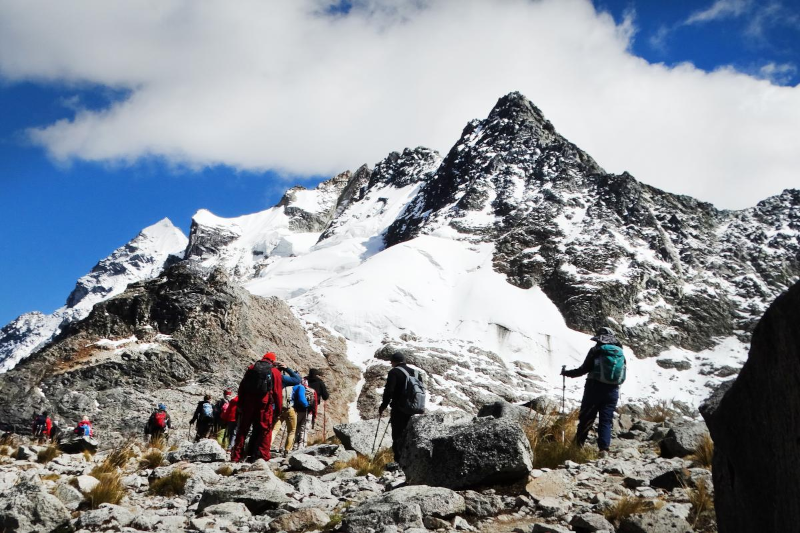
One of the first decisions you’ll make when looking at Salkantay trek packages is choosing between a four or five-day itinerary. While a single day might not seem like much, it fundamentally changes the pace and experience of your adventure. The 5-day trek offers a more relaxed pace that allows your body to better handle the altitude and the long hiking days. The 4-day version is a much more demanding, fast-paced challenge designed to save time.
The most significant difference in the Salkantay trek to Machu Picchu route is a special viewpoint you miss on the shorter trip: Llactapata. On the 5-day journey, you’ll hike to this incredible, lesser-known Inca ruin that sits on Machu Picchu. Your reward is a breathtaking, crowd-free first glimpse of the lost city from a unique angle. It’s a magical moment that many trekkers say is a highlight of their entire trip.
So, what happens on the 4-day trek instead? To make up for the lost day, you skip the hike to and from Llactapata entirely. Instead, you are driven by van for a portion of the journey that the 5-day group covers on foot. This means the 4-day option involves less overall hiking, but it compresses the toughest parts of the trek.
When Is the Best Time of Year for the Salkantay Trek?
The choice between the most appropriate time of the year to do Salkantay Trek is easy; it is just a matter of a trade-off between the weather and the number of people. Peru Dry Season is the most popular, in April- October. The mountains are in their best form and it is the most likely season to have clear and sunny days. The trade off is that it is colder at night and you will be sharing the incredible scenery with more other adventurers. It is during these months that you will be at a loss of trek packages of salkantay.
To have a potential sweet spot, you can think about the months of May and September. Which are the shoulder months. These are generally the most favorable months of the year. The weather is excellent, and there are not so many people on the trail as there are in the high season between June and August. The other one is the Wet Season (November to March). Where the landscape is turned into a green paradise with less hikers. Nevertheless, one should be ready to face rain showers everyday. Which can transform an already difficult trail to be even more difficult and make salkantay trek even harder.
The Guide to Selecting a safe and ethical Salkantay Tour Company.
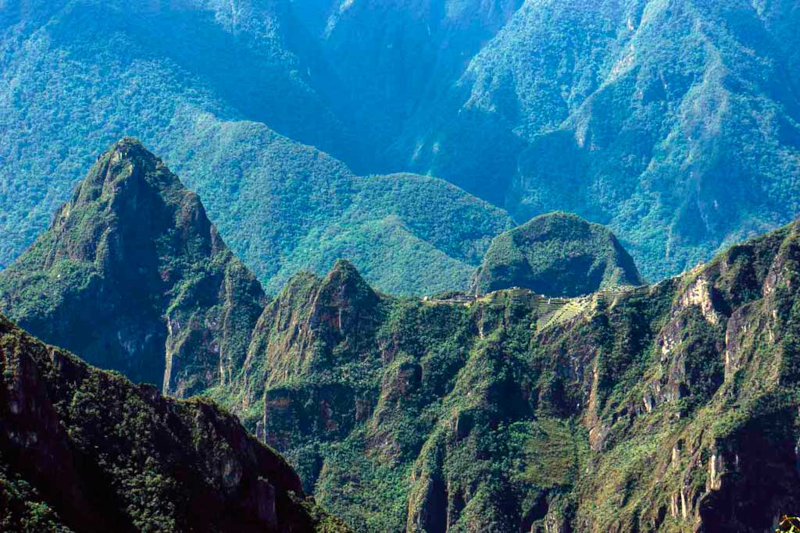
Having your travel dates in mind, the next big thing is to select the one who will guide you on this epic trip. The results of a simple search of the best salkantay trek tour agencies are overwhelming. There are an abundance of companies providing a variety of tours is impressive. However, the choice of a firm that is reliable is the most critical aspect of the trek. Your company defines what quality of your guide is, what are your equipment, and what is your overall experience.
In order to sift the wheat when selecting a salkantay tour operator. The next checklist can be used with the following simple checklist:
Safety Record: Have they outstanding and recent reviews on websites such as TripAdvisor? Do they specifically say that they have oxygen and a first-aid kit?
Porter Welfare: What is their treatment to their staff? Find firms that have policies on reasonable wages, correct equipment, and weight of their porters and horsemen.
Group Size: Do they maintain small groups (Usually 12 or less)? Smaller groups imply a more intimate experience and less influence on the trail.
Clear Inclusions: Does the Machu Picchu ticket, train ticket and all transportation inclusions, are clearly provided? Make sure that you do not get caught by checking what is covered.
Porters and Guides
The latter, which is the second point, is the Porter welfare, an important indicator of a company quality. The heroes of the trek are the porters and the horsemen and a company who cares about the well being of their team. A price that is unusually low is the first significant warning sign. It can be assumed that corners are being cut in terms of staff compensation, quality of food, or safety equipment. Responsible tourism implies that the local people upon whose warm welcome you depend are treated in a respectful way.
At the end of the day, an acceptable business organization does not just consider the lowest cost. Although there are operators with luxurious salkantay trek options (lodges, not tents). These are the basic requirements of safety and ethics required of a good company. What then are you likely to spend on this adventure?
How much does a Salkantay Trek Cost? A Full Price Breakdown
There are generally three unofficial levels of the average cost of a Salkantay trek when budgeting this adventure. Budget airlines can market their fares at as low as $450, with the average mid-range firms falling between the range of $600 to 850. On the most expensive side, luxury lodge to lodge treks are priced well above 1500. Such a price is not out of nowhere but is directly proportional to experience that the guide has, quality of food, equipment, and, above all, the reason to fairly treat the trek crew.
The middle ground in travels is the golden mean of price and quality to the majority of travellers. These Salkantay trek tours are sure to meet the safety and ethical considerations mentioned above without disregarding on the basic things that make the trek a fantastic experience. A rock-bottom price might be appealing, but has its dark side of a workload that is overworked or substandard equipment. Which turns what was meant to be a dream trip into a nightmare. A little more spending here is an outlay in your own personal safety and pleasure.
In addition to the sticker price, there is yet another cost to consider, besides, tips to your crew. Tipping is a highly praised and accepted aspect of the trekking culture in Peru and it is a vital addition to the salaries of the crew as well as a direct means of appreciating them and their amazing effort. Certainly, as a rule of thumb, you need to allocate more money, about 100-150 USD per trekker, which your guide will assist you in gathering and sharing it between the chefs and horsemen on the last day.
An adventure into Luxury Salkantay Treks.
You are lucky to the extent that the thought of being in an awe-inspiring mountainous terrain means much more to you than being in a tent. Even the highest quality luxury Salkantay trek packages will replace the camp-like sites with a row of luxurious mountain lodges drilled directly out of the rock. You do not have to get into a sleeping bag, but warmly walk into a door of a nice deceit after finishing your hiking in the daytime. This happens to be the Salkantay Trek but redesigned to suit the comfort seeker in you.
Is the Salkantay Trek Worth It?
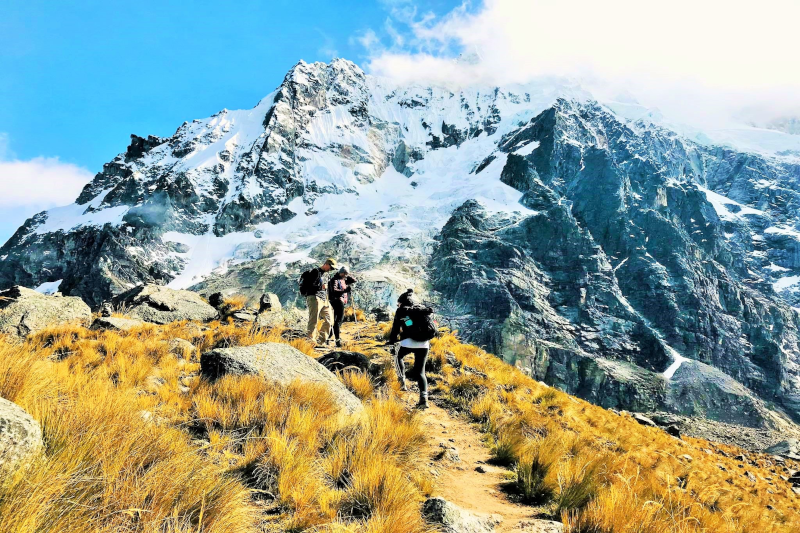
After the sweat, the high-altitude passes, and the early mornings, the reward is a moment of pure, earned magic. This isn’t just about arriving at Machu Picchu; it’s about the journey, the feeling of standing in the shadow of a sacred mountain before descending into the vibrant cloud forest. You didn’t just see the Andes; you experienced them step by step.
Your next step isn’t a commitment; it’s an inspiration. Start by browsing the itineraries of two or three well-regarded companies. See the photos, read the day-by-day descriptions, and imagine yourself there. You now have everything you need to turn that spark of curiosity into a real plan.